 admin
Heavy summer storms in older suburbs bring a problem that has nothing to do with leaky windows or cracked foundation walls. Water rises up through the basement floor drain, gray and smelly, and spreads across the floor in minutes. It isn’t rainwater seeping in from outside. It’s wastewater coming back up from a sewer that has more water than it can carry.
Many homes built in the middle of the last century connect to sewers that were never sized for today’s storms. Some neighborhoods still have older combined systems that carry stormwater and sewage in the same pipes. When heavy rain fills the public main, the pressure has to go somewhere, and the lowest opening in a house is usually the basement drain.
That’s why more homeowners now ask about a backwater valve before they finish a basement, not after the first cleanup. Licensed contractors such as Carlong Plumbing install these valves along with camera inspections and sewer line repairs. Still, the decision works best when the homeowner understands what the valve does, where it goes, and what it can’t do.
The One-Way Door in Your Sewer Line
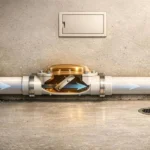
A backwater valve sits on the main building drain, the pipe that carries everything from your sinks, toilets, tub and washing machine out to the street. Inside is a hinged flap that stays open in normal conditions, so wastewater flows out freely. When the public sewer surcharges and water starts flowing backward toward the house, that flap swings shut and seals the pipe.
The idea is simple, but it has an important limit that many owners miss. While the flap is closed, nothing from the house can drain out either. If someone runs the dishwasher, starts a load of laundry or flushes a basement toilet during a storm, that water collects behind the closed valve. With nowhere to go, it can overflow the lowest fixture in the house. A valve protects the basement from the city’s water, not from your own.
That’s why households with a valve usually make a simple rule: when the rain is heavy and the streets are flooding, hold off on laundry, long showers and the dishwasher until the storm passes.
Not All Valves Work the Same Way
Flap or check valves are the most common type. They close automatically when backflow starts, so they work whether or not anyone is home. Their drawback is the seal. According to a FEMA-based fact sheet on sewer backflow valves, these automatic valves don’t seal as tightly as a gate valve, so debris caught under the flap can let some water through.
Gate valves are closed by hand, usually with a wheel or lever. They give a stronger seal, but they depend on someone being home to close them before the backup starts. That makes them less practical for owners who travel or work long shifts.
Combination valves pair an automatic flap with a manual gate, giving you the convenience of one and the backup protection of the other. They cost more and take up more space in the line, but they’re often the choice for basements that have flooded more than once.
Floor drain plugs, sometimes called float check plugs, drop into a single floor drain and lift a ball to seal it when water rises. They’re inexpensive and easy to install, but they only protect that one opening. Sewage can still come up through a basement toilet, laundry tub or shower that isn’t covered.
Placement Matters More Than the Hardware
The most important detail is where the valve goes. It has to sit downstream of every basement fixture it’s meant to protect. If a floor drain or basement toilet ties into the line between the valve and the street, that fixture has no protection. This is why many plumbers run a camera through the line before cutting into the floor. The camera shows where each branch connects, whether the old clay or cast iron pipe can safely take a new fitting, and whether roots or cracks need repair first.
Foundation drains add another wrinkle. In some older homes, the footing tiles around the foundation drain into the sanitary line. If they connect upstream of a closed valve, groundwater around the house can build up with nowhere to go during the same storm. A good installation plan accounts for those connections, sometimes adding a sump pump to handle the groundwater separately.
The valve also needs an access point. Most installations put an access cover in the basement floor so the flap can be inspected and cleaned. Grease, wipes and debris can keep the flap from closing fully, and a valve that hasn’t been opened in years may fail at exactly the wrong moment. Checking it each spring and fall, and after any major storm, keeps it ready.
Permits and Help From the City
Installing a backwater valve means cutting into the floor and the main drain, so it usually needs a permit and a licensed plumber. FEMA’s Homeowner’s Guide to Retrofitting covers backflow valves in its section on protecting a home’s service equipment, and it treats plumbing changes as work for a licensed professional, not a weekend project. Some communities in the region also help homeowners with the cost because sewer backups affect whole streets, not just single houses. It’s worth asking your city’s building or engineering department whether a program like that exists, since they often have waiting lists and specific rules.
Thinking Beyond the Valve
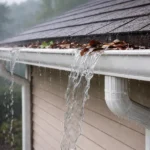
A backwater valve is one layer of protection, not a complete solution. Homeowners in flood-prone areas usually combine it with other steps. Downspouts that empty well away from the foundation keep roof water out of the ground around the basement. A sump pump with a battery backup handles groundwater when the power goes out during a storm. Keeping grease and wipes out of drains reduces the clogs that make backups worse.
Insurance is worth checking too. Most standard homeowner policies exclude sewer backup unless you add a specific endorsement, and many owners only find this out after the cleanup bill arrives. Some insurers offer a lower premium when a mainline backwater valve is installed, which can offset part of the cost over time.
For a home with a finished basement, a properly placed and maintained valve is one of the most effective ways to make sure a heavy storm stays an outside problem.